
As COP31 negotiations in Antalya enter overtime, the central questions of climate diplomacy remain unresolved: will governments commit to a credible transition away from coal, oil and gas, and will wealthy countries provide the finance that climate-vulnerable nations need to adapt? The latest draft texts have intensified those questions, exposing the widening gap between public promises and the political compromises being negotiated behind closed doors.
The 31st United Nations Climate Change Conference (COP31), hosted in Antalya, Türkiye, with Australia leading the negotiations, was scheduled to conclude on 20 November. But as of 21 November, talks have continued beyond the deadline. Negotiators from nearly 200 countries are still trying to bridge disagreements over fossil fuels, climate finance, adaptation and the shape of the final political agreement.
This is more than another procedural delay. The dispute goes to the heart of the Paris Agreement: whether countries will translate the commitment to limit global warming into a practical, equitable plan to reduce emissions and protect people already experiencing the effects of climate change.
Fossil fuels: the words missing from the draft
One of the most contentious developments at COP31 has been the removal of explicit references to transitioning away from fossil fuels from a revised draft of the conference’s proposed cover decision. Reuters reported on 20 November that references to ending fossil fuel use had been stripped from the text following objections from Saudi Arabia and other major oil and gas producers. The same draft also dropped a proposed $120 billion adaptation-finance target for developing countries.
For countries facing rising seas, extreme heat, floods and drought, the omission is not simply a matter of wording. Coal, oil and gas remain the principal sources of human-caused greenhouse gas emissions. A global agreement that discusses climate ambition without clearly addressing the fuels driving the crisis risks weakening the credibility of the entire process.
Panama’s Environment Minister Juan Carlos Navarro publicly challenged the absence of fossil-fuel language, saying a COP decision that does not even mention fossil fuels was unacceptable. His intervention reflected the frustration of governments and civil-society groups that want the transition pledge made at COP28 in Dubai to be carried forward through a clear implementation pathway.
There is also a growing concern about the influence of fossil-fuel interests in climate negotiations. The presence of industry representatives at COP meetings is not, by itself, proof that a particular decision has been captured. But transparency, conflict-of-interest safeguards and meaningful participation by communities most affected by extraction and pollution are essential if the process is to retain public trust.
Electrification is important—but it cannot replace a fossil-fuel phase-out plan
Türkiye has promoted a voluntary “35 by 35” electrification goal, aimed at increasing electricity’s share of global final energy consumption to 35 per cent by 2035. The initiative has attracted support from a number of countries and stakeholders. The Earth Negotiations Bulletin reported that the goal remained contested as the talks approached their scheduled conclusion.
Expanding access to electricity, electrifying transport and industry, and accelerating renewable energy are all important parts of the transition. But electrification alone does not guarantee emissions will fall. If new electricity demand is met by additional coal- and gas-fired generation, clean-energy capacity may be added without displacing fossil fuels. A credible pathway therefore needs measurable renewable-energy deployment, stronger grids, energy efficiency, storage, access for underserved communities and a clear plan to retire unabated fossil-fuel infrastructure.
The debate is not about choosing between electrification and a fossil-fuel transition. It is about ensuring that electrification is genuinely clean, affordable and fair—and that it replaces, rather than simply supplements, polluting energy systems.
Climate finance: the unresolved test of climate justice
Finance remains the other major fault line. Developing countries argue that they cannot be expected to rapidly decarbonise, protect communities and rebuild after climate disasters without predictable support from wealthier countries whose historical emissions have contributed disproportionately to global warming.
The proposed $120 billion annual adaptation-finance figure became a focal point in the Antalya negotiations. Reuters reported that the target was removed from a later draft. The scale of the gap is stark: the adaptation needs of developing countries are measured in hundreds of billions of dollars each year, while the public finance currently reaching them remains far below that level. Announcements and pledges are not the same as accessible grants, and loans can deepen the debt burdens of countries already spending heavily on climate-related recovery.
Climate Action Network International has called for stronger adaptation finance, a credible pathway for the Loss and Damage Fund, and a just transition away from fossil fuels. Its assessment is that the test of COP31 should be whether decisions protect people and livelihoods—not simply whether negotiators produce a text before leaving Antalya.
The distinction between finance announced and finance delivered matters. Vulnerable countries need grants and highly concessional resources that reach local governments, farmers, coastal communities, Indigenous peoples and households. They also need funding that is additional, predictable and accessible without lengthy procedures that delay action until after a disaster has occurred.
What the international media are reporting
Coverage from international news organisations points to a common concern: the conference has reached a critical impasse over fossil fuels and the financial responsibilities of richer countries.
- Reuters reported on 20 November that negotiations had gone into overtime, with fossil-fuel language and the proposed $120 billion adaptation target absent from the revised draft. It also reported that carbon-removal technologies remained in the text, prompting concerns that they could be used to justify continued fossil-fuel production.
- Associated Press reported on 21 November that negotiators were still working through the weekend, while the conference venue was already being packed up. AP described strong criticism from activists and vulnerable countries over the draft’s failure to mention fossil fuels.
- The Guardian reported that talks had moved into overtime amid protests and criticism from African ministers and civil-society groups, with the latest draft remaining silent on fossil fuels.
- Al Jazeera highlighted the deadlock over fossil-fuel language and the risk that the summit could become a “fossil summit” rather than deliver the commitments expected by climate-vulnerable countries.
- Channel NewsAsia reported that nearly 200 countries remained divided as negotiations continued into Saturday, with energy, finance and geopolitical tensions complicating the search for agreement.
These reports are not identical in tone or emphasis, but they converge on the central issue: the credibility of the climate process depends on whether the final decisions address the causes of warming and provide practical support to those most exposed to its impacts.
Pakistan’s stake: climate vulnerability must translate into climate finance
For Pakistan, the debate in Antalya is not abstract diplomacy. The country contributes less than one per cent of global greenhouse-gas emissions but faces severe exposure to climate-related hazards, from catastrophic flooding and extreme heat to glacial melt, water stress and threats to agricultural livelihoods.
Pakistan’s Prime Minister Shehbaz Sharif attended the COP31 Leaders’ Summit and called for grant-based climate finance that does not add to the debt of vulnerable countries. According to Pakistan’s Ministry of Information and Broadcasting, he recalled that the 2022 floods affected around 33 million people and urged leaders to judge COP31 by practical achievements rather than political commitments. He also called for stronger resilience and adaptation funding, describing these resources as survival funds for struggling economies.
That message should remain central to Pakistan’s climate diplomacy. Adaptation is not a secondary concern to be addressed after mitigation negotiations are complete. It means protecting lives through early-warning systems, climate-resilient infrastructure, water management, heat-health plans, resilient agriculture, ecosystem restoration and disaster preparedness. It also means ensuring that communities on the frontlines have a voice in deciding how climate funds are spent.
Pakistan’s transition at home also requires a credible and inclusive energy strategy. The expansion of clean electricity, energy efficiency and distributed renewable power can reduce exposure to imported fuel-price shocks while improving energy access. But the transition must be planned around affordability, grid reliability, workers’ livelihoods and the needs of communities that depend on existing energy industries.
The 1.5°C warning—and the cost of delaying action
The negotiations are unfolding against a deteriorating scientific and climate-risk outlook. Reuters reported that a recent UN assessment found the world is on course to exceed the Paris Agreement’s 1.5°C warming threshold. Crossing that threshold does not mean every effort becomes pointless; every fraction of a degree avoided still matters. But it does mean the risks of heat extremes, ecosystem loss, sea-level rise and other impacts become increasingly severe.
Discussions about carbon capture and carbon removal have also become contentious. These technologies may have a role in addressing residual emissions in some sectors, but they cannot substitute for rapid emissions reductions or become a licence to expand fossil-fuel production indefinitely. The priority remains cutting emissions at source, protecting natural carbon sinks and accelerating a fair transition to clean energy.
What should a credible COP31 outcome deliver?
A meaningful outcome from Antalya should do more than acknowledge the urgency of climate change. It should establish a practical direction for action, including:
- A clear fossil-fuel transition pathway: a credible process to implement the commitment to transition away from fossil fuels, with timelines, accountability and support for workers and affected communities.
- Clean electrification: renewable electricity, efficiency, storage and grid investment that displace fossil generation rather than simply add new capacity.
- Accessible adaptation finance: predictable grant-based support that reaches vulnerable countries and communities, with transparent delivery mechanisms.
- Progress on loss and damage: a properly resourced response for people facing climate impacts that cannot be avoided through adaptation alone.
- Transparency and accountability: clear reporting on finance, emissions and implementation, alongside safeguards against conflicts of interest.
- A just transition: policies that protect workers, reduce energy poverty, respect Indigenous rights and ensure that communities are not left to carry the costs of change.
The world cannot afford another cycle of promises
COP31 is a test of whether multilateral climate diplomacy can still respond to the scale of the crisis. The disagreements in Antalya are real: countries have different energy systems, development needs and political constraints. But those differences cannot become a permanent excuse for postponing action.
For people living through floods, heatwaves, droughts, food insecurity and rising energy costs, the distance between a negotiated paragraph and real-world protection is measured in lives and livelihoods. The final outcome must be judged not by the number of speeches, pledges or voluntary initiatives, but by whether it accelerates emissions cuts, delivers finance and helps vulnerable communities prepare for a more dangerous climate.
As negotiations continue in Antalya on 21 November, the central question remains: will governments confront the political and economic power that keeps the world dependent on fossil fuels—or will the people least responsible for the climate crisis once again be asked to pay the highest price?
Photo credits and further reading
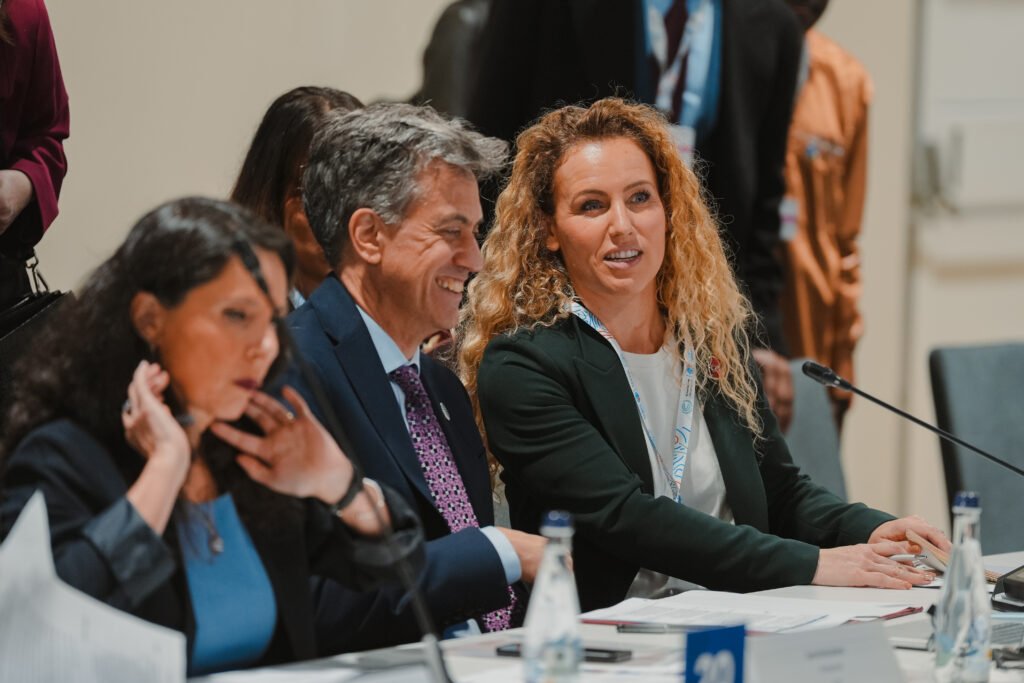
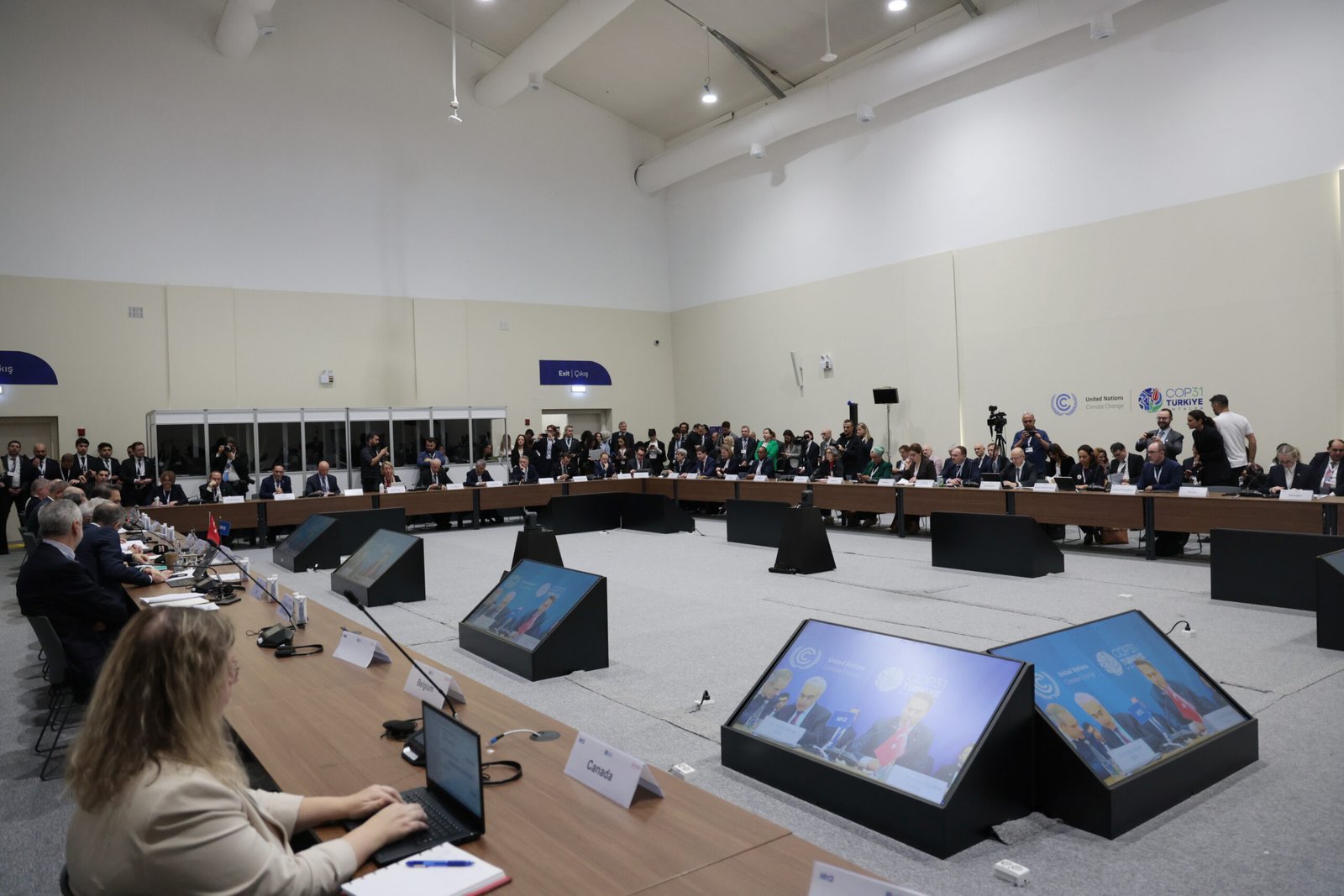
Images: “Foreign Secretary Ed Miliband attends COP31 in Türkiye” — Ben Dance / Foreign, Commonwealth & Development Office, licensed under CC BY 4.0 (editorial use; attribution required). “General view of the COP31 Presidency’s Energy Ministerial Meeting” — Necati Savas / European Union, 2026 / EC Audiovisual Service, CC BY 4.0. Images are reproduced with attribution; no endorsement by the photographers or institutions is implied.
- Reuters: COP31 climate talks spill into overtime as nations quarrel over fossil fuels
- Associated Press: Climate talks in overtime as nations wrestle with response to worsening global warming
- The Guardian: COP31 talks go into overtime as debate rages over lack of fossil fuels in draft deal
- Al Jazeera: Fossil fuel talks deadlock pushes COP31 climate summit into overtime
- Channel NewsAsia: Countries race to secure COP31 deal after fossil fuel row
- Climate Action Network: State of Play from Antalya — COP31 Midway Media Brief
- Government of Pakistan: Prime Minister calls for grant-based climate finance at COP31
- UN Climate Change: Official COP31 photo gallery
- IISD Earth Negotiations Bulletin: COP31 daily highlights and photographs, 20 November 2026
Editorial note: This article reflects the state of negotiations and reporting available on 21 November 2026. COP31 discussions were still continuing beyond the scheduled closing date; the final adopted decision may differ from the draft texts discussed here.