

Syed Hasnain Raza, environmental filmmaker, climate communicator and educator, was invited by The Black Hole in Islamabad for a conversation on “Who Will Tell Pakistan’s Nature Story? Climate, Culture and Storytelling.” Raza is the Founder and Director of the Media Project on Conservation, Environment & Nature (MPCEN), Founder of Find Focus Films, and Founder of the Pakistan International Wildlife & Eco Film Festival (PIWEFF). Through more than a decade of work in environmental filmmaking, conservation communication and media education, he has focused on bringing Pakistan’s nature and climate stories to wider audiences.
At the discussion, Raza spoke about Pakistan’s extraordinary potential for public-interest storytelling—and the striking gap between the richness of its natural and cultural heritage and the small number of stories being documented and shared. He argued that the country’s landscapes are not just scenery: they hold histories, identities, ecological knowledge and living relationships between people and nature.
From the Hindu Kush and Himalayas to the Indus Valley, Gandhara, the deserts of Thar and the Makran coast, Pakistan’s landscapes hold stories that connect people, nature and history. Yet many remain undocumented, underrepresented or absent from public conversations.
Pakistan has a storytelling opportunity we haven’t fully recognised
Pakistan is often discussed through the familiar lenses of politics, economics, security and development. Even when climate change enters the conversation, the discussion frequently revolves around disasters, floods, heatwaves, melting glaciers and environmental statistics.
These issues are important. But there is another dimension to Pakistan’s environmental story that deserves considerably more attention: the relationship between nature, culture and identity.
Pakistan is not simply a country with diverse landscapes. It is a country where landscapes have shaped civilisations, influenced cultural identities, inspired folklore and determined how communities live, work and understand their surroundings.
The mountains of the Hindu Kush and Himalayas, the river systems of the Indus Basin, the deserts of Sindh and Balochistan, the wetlands and mangrove forests of the coast are not just geographical features. They are living archives of human experience.
Yet, how many of these stories are being documented through films, photography, journalism, literature and other forms of public-interest storytelling? The answer is: not nearly enough.
Every landscape has a story, and every story has a cultural identity
When we talk about indigenous cultures in Pakistan, we often refer to well-known communities such as the Kalash or the people of Thar. These communities are important examples of the country’s remarkable cultural diversity. But our understanding of cultural identity needs to extend much further.
Travel across Pakistan and the relationship between geography, history, language and culture becomes immediately apparent. The cultural landscape changes as dramatically as the physical landscape.
In the northern regions, the Hindu Kush and Himalayas hold distinct histories, traditions, languages and ecological knowledge. Mountain communities have developed ways of living around glaciers, rivers, forests, pastures and seasonal cycles.
Moving southwards, the historical landscape of Gandhara and Taxila introduces us to centuries of cultural exchange, Buddhist heritage and the legacy of the Kushan dynasty.
Further along the Indus, we encounter the extraordinary archaeological legacy of the Indus Valley Civilization, including Harappa and Mohenjo-daro.
Beyond these historical centres are the diverse cultural landscapes of Sindh, Punjab, Balochistan and the coastal belt, each with its own traditions, languages, folklore, architecture, agricultural practices and relationship with nature.
One could argue that almost every few hundred kilometres across Pakistan reveals another cultural world, another historical memory and another way of relating to the natural environment. These identities deserve to be documented not as isolated cultural curiosities, but as interconnected stories of people and their environments.
Wildlife is also part of our cultural heritage
One of the most overlooked aspects of environmental storytelling is how deeply wildlife is embedded in our cultural imagination. Animals are not simply subjects for wildlife documentaries. They appear in our folklore, poetry, traditional symbolism, artistic expressions, historical artefacts and regional identities.
Consider the markhor in the mountainous landscapes of Chitral and its place in local identity and heritage. Consider the snow leopard, an iconic species of the high mountains of Gilgit-Baltistan, representing both the ecological significance and fragility of these landscapes.
The chukar, peafowl and other birds appear in cultural references, poetry, folklore and traditional imagery. Go further back in history and examine the seals and material culture of the Indus Valley Civilization. Animals and natural forms are part of this ancient visual vocabulary, offering glimpses into how people represented and engaged with the natural world.
These connections matter. They remind us that biodiversity is not merely a scientific subject. It is also part of how societies understand themselves and their surroundings.
A disappearing species can represent more than an ecological loss. It can mean the disappearance of a cultural symbol, a traditional reference, a memory or a relationship that has existed between people and a landscape for generations. This is where nature, culture and climate intersect.
The climate crisis is also a crisis of cultural memory
Climate change is transforming Pakistan’s landscapes at an alarming scale. Glaciers are changing, river systems are under pressure, forests and wetlands face degradation, coastal ecosystems are threatened, and communities are increasingly exposed to extreme weather.
But beyond the immediate environmental and economic consequences, there is a less frequently discussed dimension: the transformation of cultural relationships with nature.
What happens to mountain communities when traditional grazing patterns change? What happens to the folklore, knowledge and livelihoods of communities when wetlands disappear or migratory bird populations decline? What happens to coastal communities when mangroves are degraded and the sea changes the landscapes they have inhabited for generations?
These are climate stories too. They are stories about identity, adaptation, memory, livelihoods and belonging. Documenting them is essential if we want future generations to understand not only what Pakistan’s environment looked like, but also how people lived with it.
We need more Pakistani storytellers telling Pakistani stories
There is a significant gap between the wealth of stories Pakistan possesses and the number of stories reaching the public.
International documentaries, conservation publications and research projects have introduced audiences to many aspects of Pakistan’s biodiversity and environmental challenges. These contributions are valuable. However, there is a need for stronger local storytelling ecosystems.
We need more Pakistani environmental filmmakers, journalists, photographers, researchers, writers, artists and digital creators documenting their own landscapes and communities.
We need stories that go beyond conventional wildlife footage and climate disaster reporting: documentaries about the relationship between communities and their forests; films about the cultural significance of mountain species; investigations into disappearing wetlands and their impact on local traditions; and stories about traditional ecological knowledge, indigenous practices, food systems, oral histories and the changing relationship between people and their environment.
Most importantly, these stories need to reach wider audiences. They should be accessible to young people, schools, universities, policymakers, conservation organisations and the general public.
This requires investment in storytelling, education, local media institutions, creative platforms and opportunities for emerging storytellers.
The role of filmmaking and new media
Environmental filmmaking can play an important role in bridging this gap. A film can bring a distant mountain community into a classroom. A photograph can make a disappearing ecosystem visible. A documentary can connect scientific research with lived experience. A well-told story can transform an environmental issue from an abstract statistic into something people understand and care about.
Digital platforms have also created opportunities to distribute these stories beyond traditional media channels. But technology alone cannot replace meaningful storytelling. Artificial intelligence and digital media tools can make content production easier, but they cannot substitute for field experience, cultural understanding, trust and authentic human perspectives.
The challenge is not simply to produce more content. It is to produce meaningful, credible and locally rooted stories. We need to move from simply showing Pakistan’s nature to explaining what it means to the people who live alongside it.
A conversation at The Black Hole
These ideas formed the basis of a recent discussion at The Black Hole in Islamabad, titled “Who Will Tell Pakistan’s Nature Story? Climate, Culture and Storytelling.”
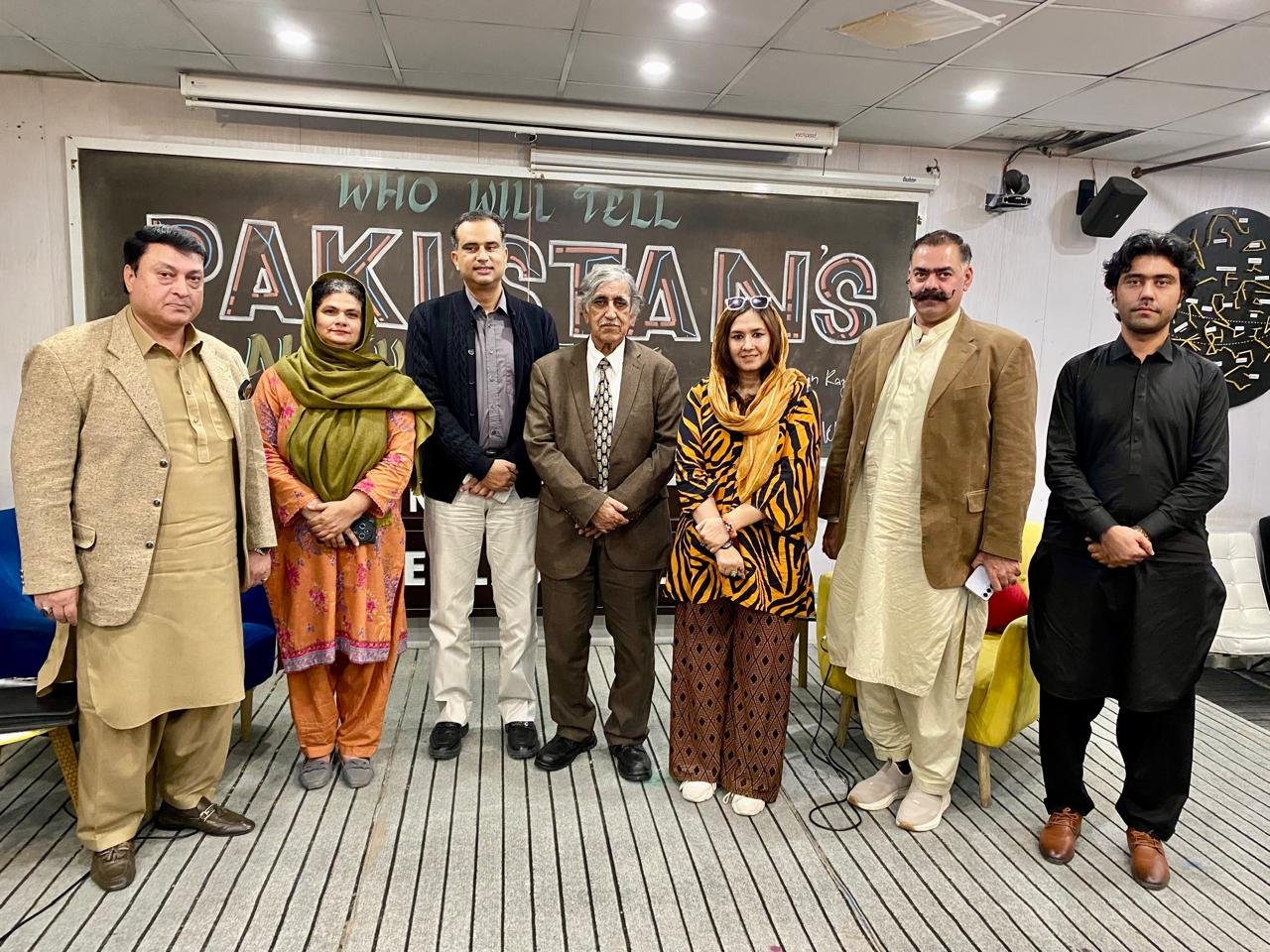
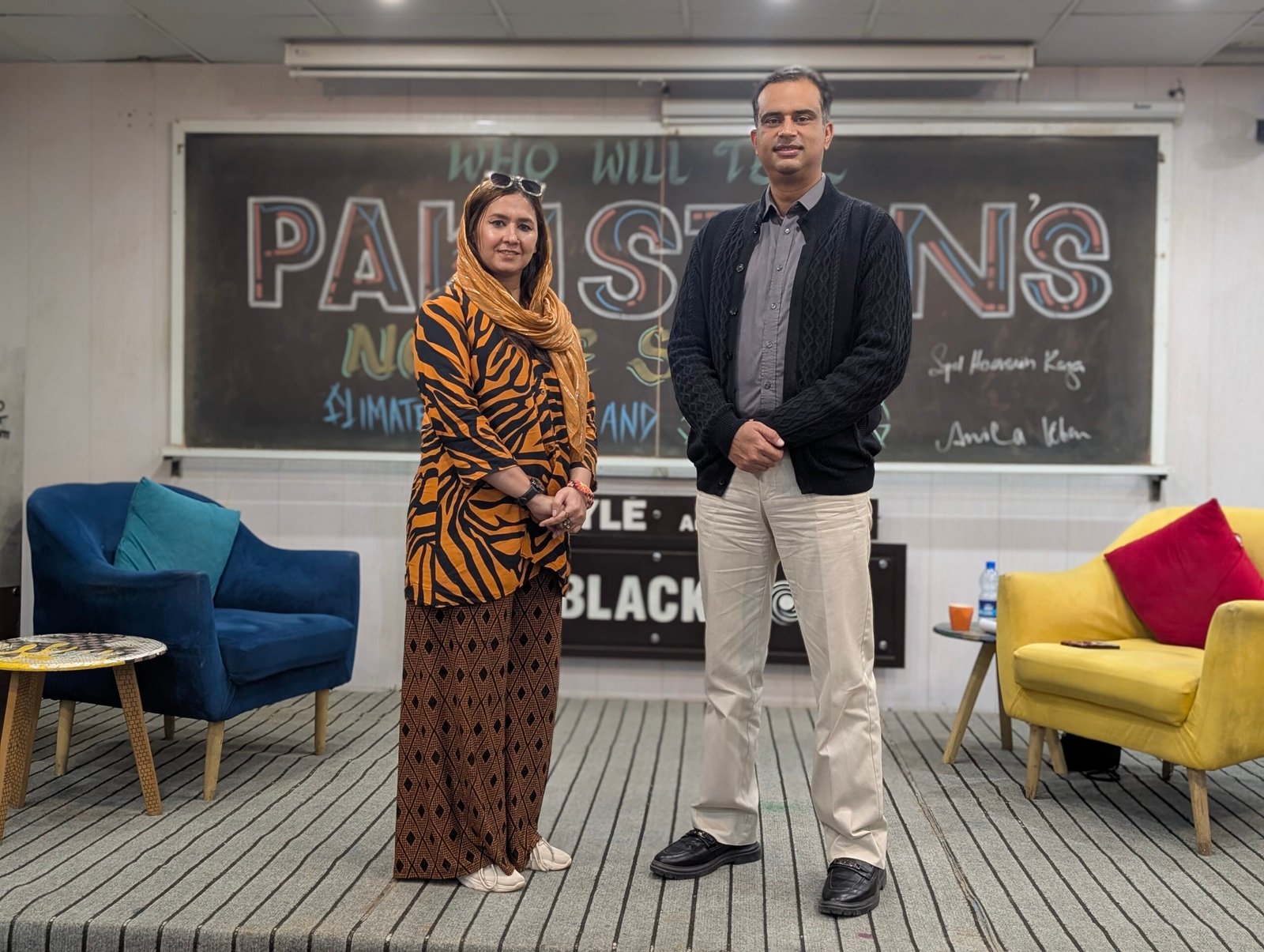
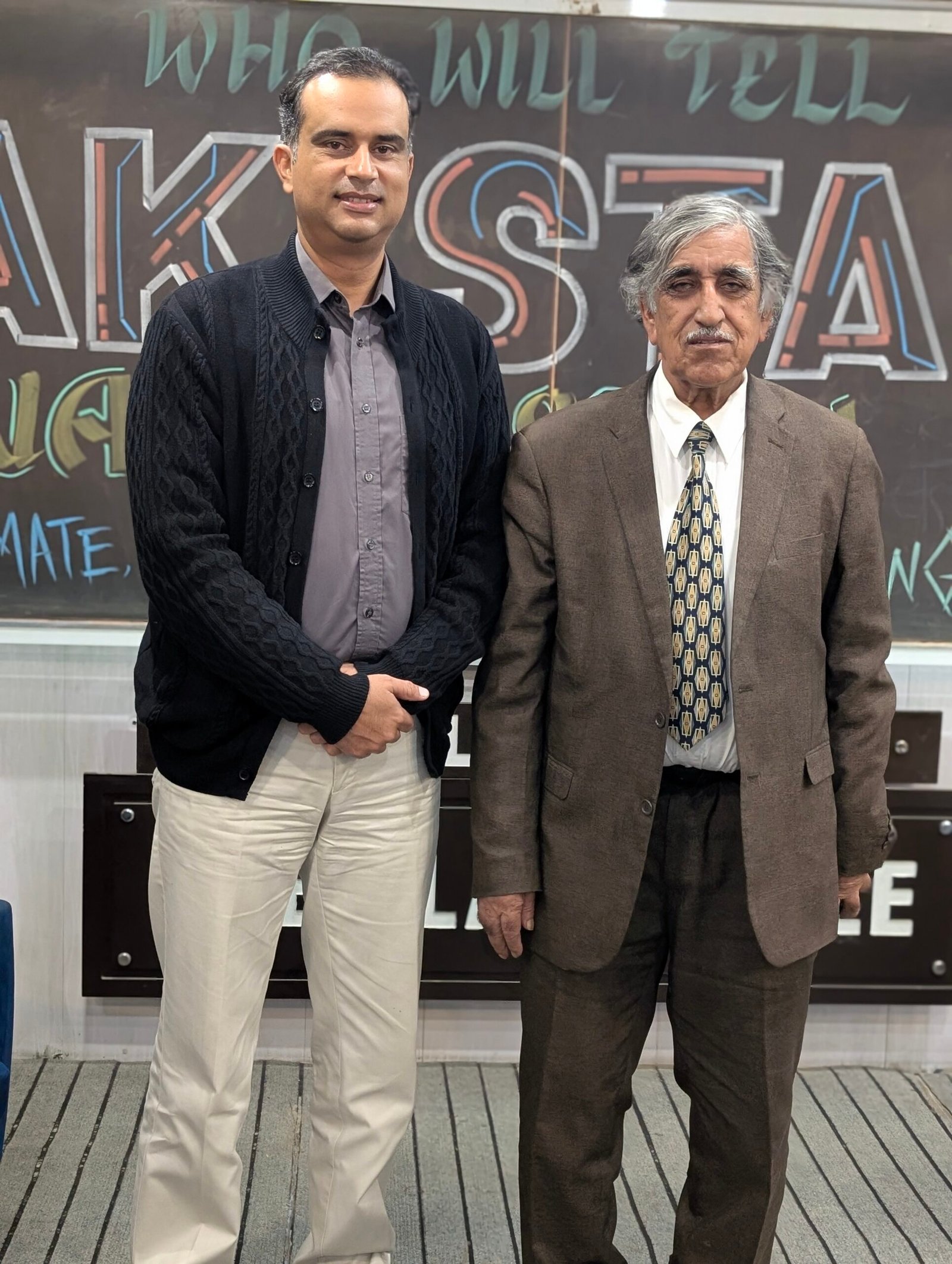
The conversation brought together environmental filmmaking, climate journalism, entrepreneurship and perspectives on mental health and advocacy. Alongside fellow speaker Farooq Khan, and with Anila Khan moderating the discussion, we explored the importance of storytelling in shaping public understanding of Pakistan’s environmental and cultural landscape.
One of the central arguments was that Pakistan has enormous potential for public-interest storytelling, particularly at the intersection of nature, climate and culture. But this potential requires people willing to explore, document, question and communicate these stories. It requires a new generation of storytellers who see environmental issues not as isolated subjects but as part of a larger cultural and social narrative.
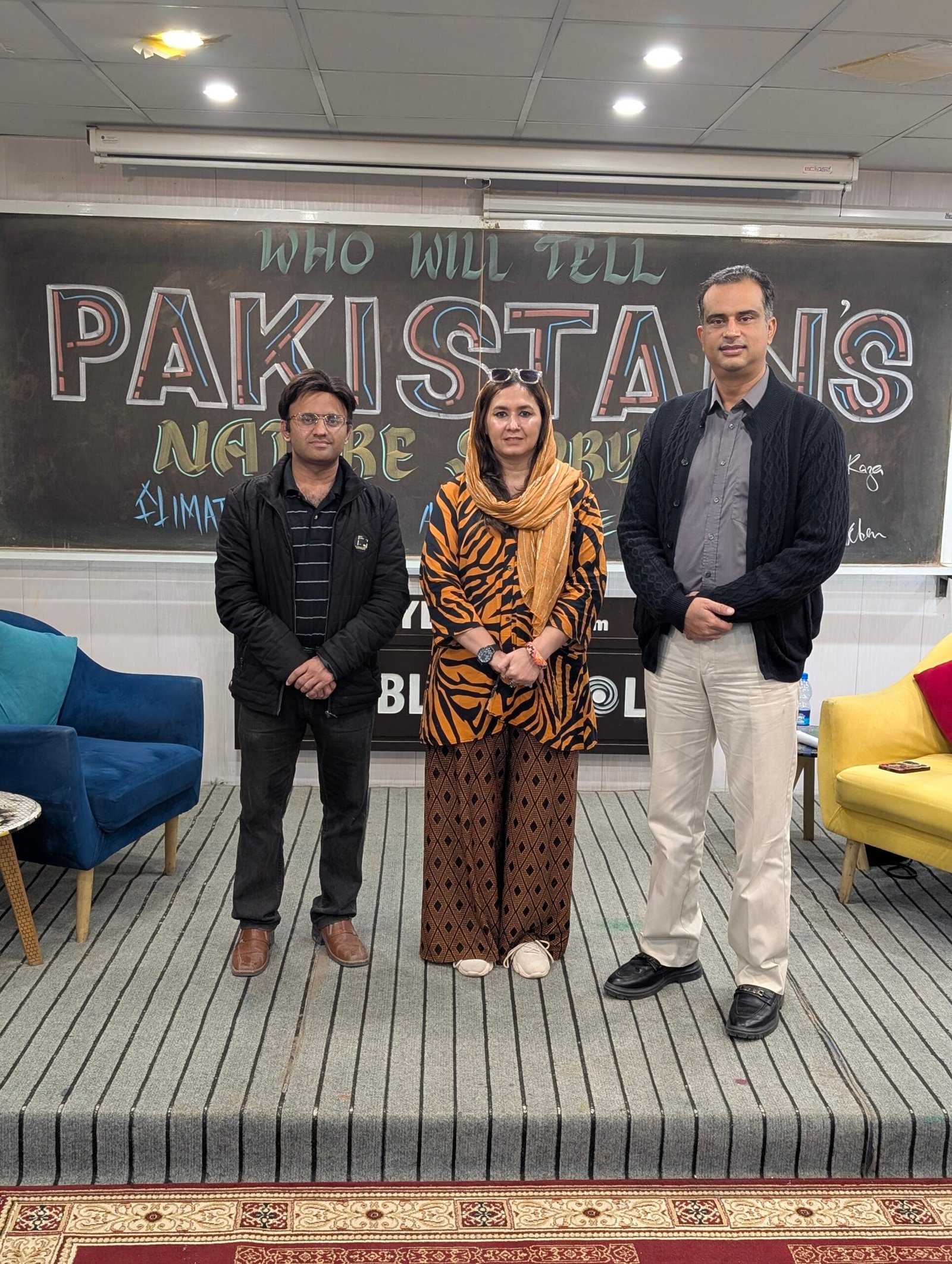
Watch the full discussion on YouTube.
The stories are already here. We need to tell them.
Pakistan does not need to invent its nature stories. They already exist in its mountains, rivers, forests, wetlands, deserts, coastlines and communities.
They exist in the oral histories of elders, the knowledge of farmers, the traditions of pastoral communities, the poetry of the region, archaeological remains, wildlife habitats and the everyday lives of people whose identities are inseparable from their surroundings.
What we need is the commitment to document these stories before they disappear, the platforms to distribute them, and the storytellers who can make them matter to wider audiences.
At a time when climate change is reshaping our environment and cultural landscapes, storytelling is not a luxury. It is an important part of conservation, education, public awareness and cultural preservation.
Pakistan has the potential to become a powerful voice in global conversations about nature, climate and culture. But first, we must learn to tell our own stories.
The question is not whether Pakistan has stories worth telling. The question is whether we are willing to tell them.
About the author: Syed Hasnain Raza is an environmental filmmaker, climate communicator and educator. He is the Founder and Director of the Media Project on Conservation, Environment & Nature (MPCEN), Founder of Find Focus Films and Founder of the Pakistan International Wildlife & Eco Film Festival (PIWEFF). His work focuses on environmental filmmaking, biodiversity conservation, climate communication and developing opportunities for public-interest storytelling in Pakistan.